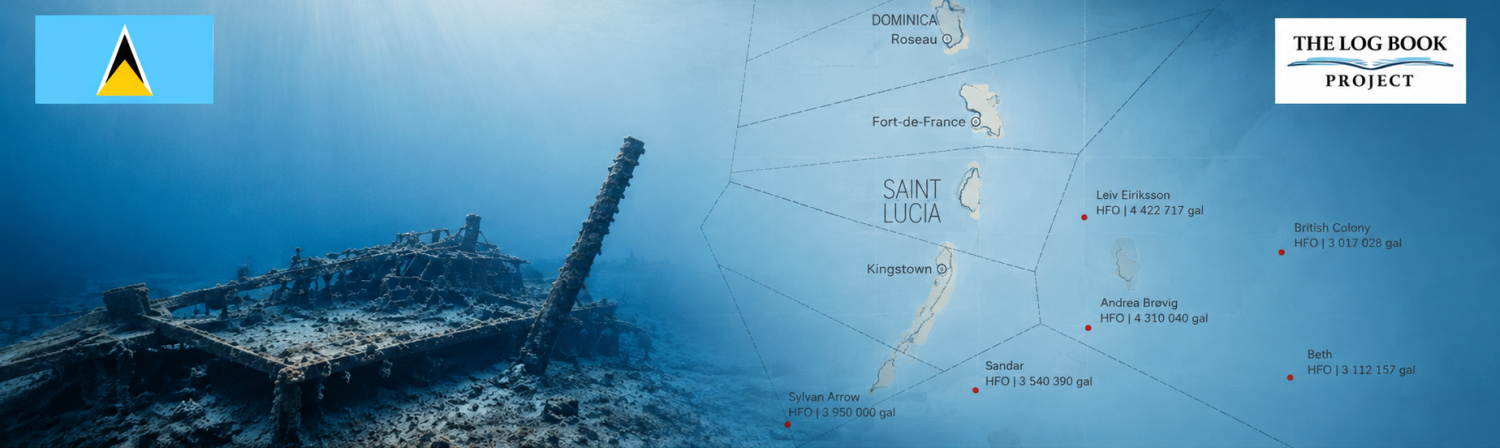


The Log Book Project’s Potentially Polluting Wrecks (PPW) initiative documents World War II shipwrecks that may still pose environmental risks today.
By combining historical records with geospatial research, we map forgotten wrecks, assess their cargoes, and highlight the long-term environmental and historical legacy of wartime maritime losses.
The Caribbean’s seabed holds a little-known legacy of the Second World War: dozens of shipwrecks — many of them oil tankers — that may still contain oil and hazardous cargo. As their steel hulls corrode, they represent both an important historical record and a potential environmental hazard.
Our project researches these Potentially Polluting Wrecks (PPWs) to bridge the gap between history, science, and public awareness.
Three founding pillars guide our work to understand the Caribbean’s hazardous wartime legacy and protect both cultural heritage and the marine environment.
RESEARCH
We compile and analyse historical records to identify wartime wrecks in Caribbean waters and estimate the petroleum cargoes they carried.
AWARENESS
We translate specialist findings into accessible stories, making the hidden seabed legacy understandable for communities, educators, and decision-makers.
COLLABORATION
We work with international initiatives — including Project Tangaroa and the Malta Manifesto — to ensure the Caribbean’s voice is included in the global conversation on Potentially Polluting Wrecks (PPWs).
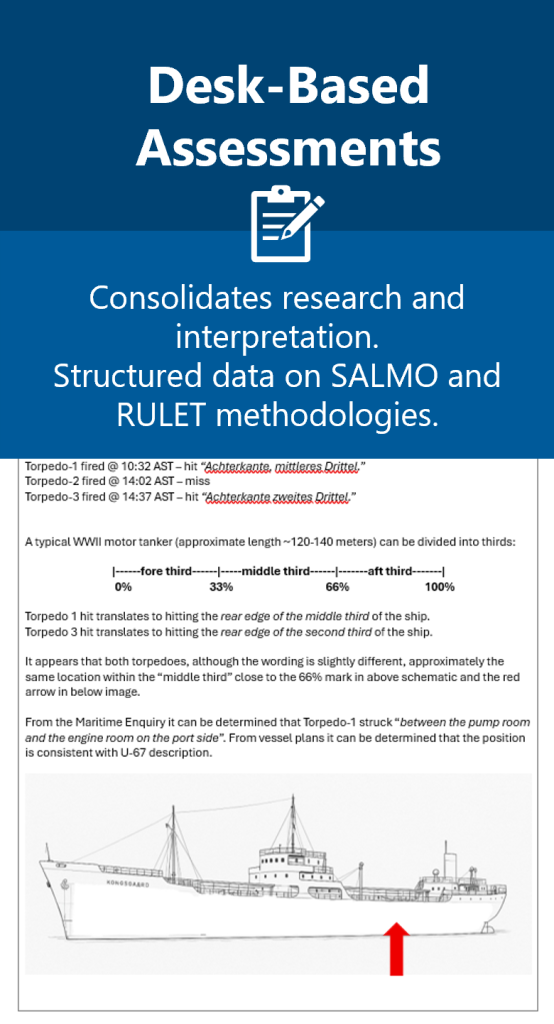
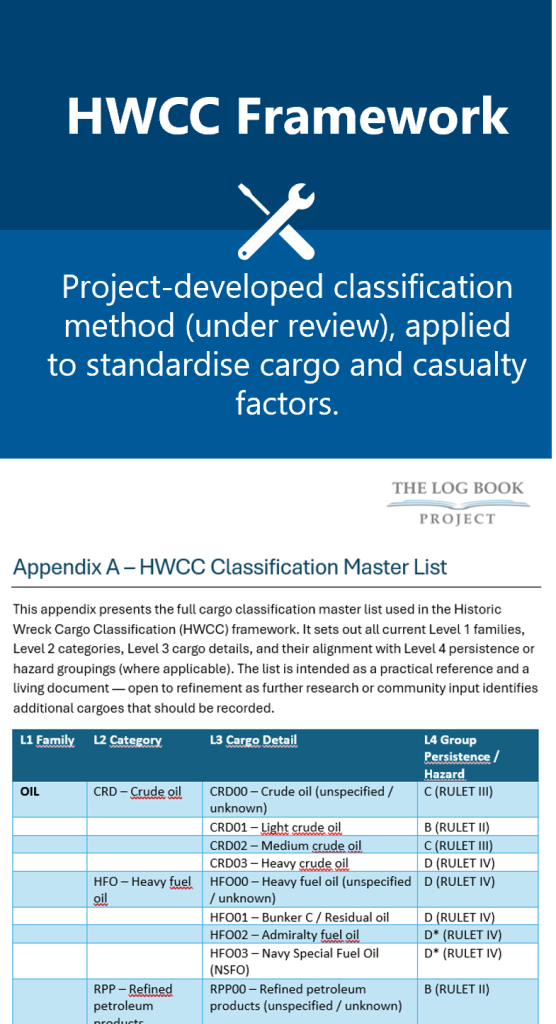
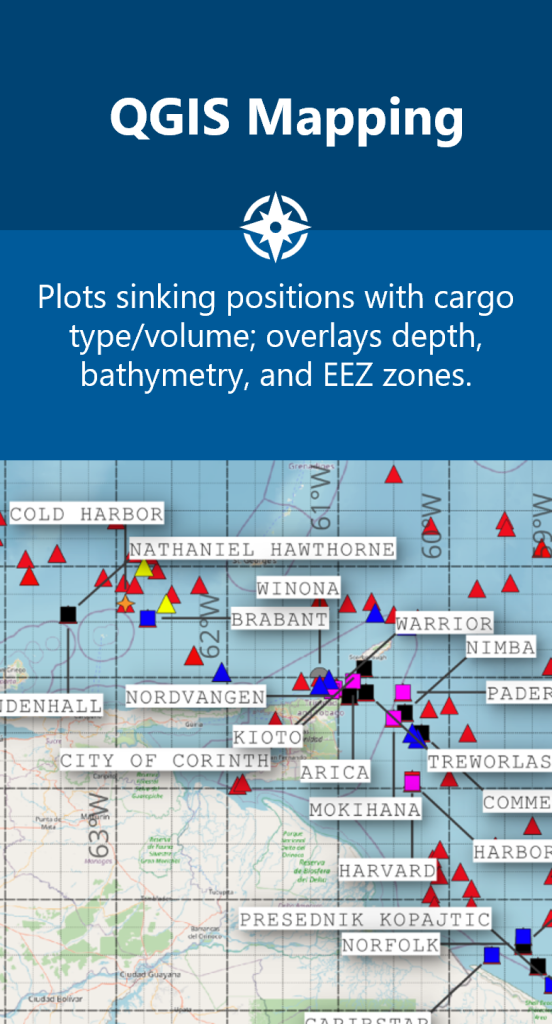
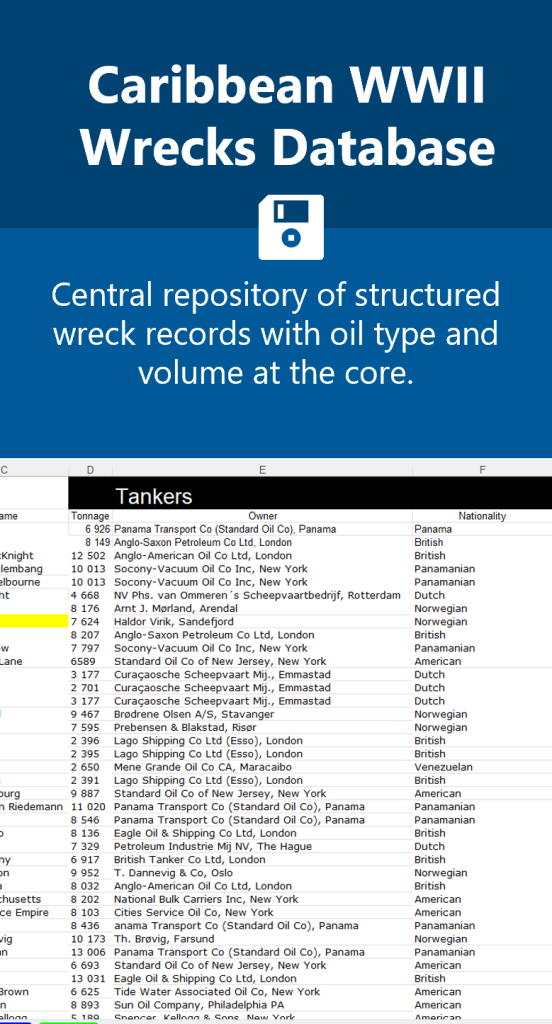
The tools and methods used in our historical research that provide the baseline for wreck identification and oil carriage.
Project scope and collaboration
This project focuses exclusively on World War II shipwrecks in Caribbean waters and does not assess active pollution events or conduct salvage operations. Its purpose is to document, analyse, and contextualise Potentially Polluting Wrecks (PPWs) through historical research and geospatial analysis.
The project welcomes dialogue with researchers, institutions, and organisations engaged in maritime history, marine science, and environmental protection.