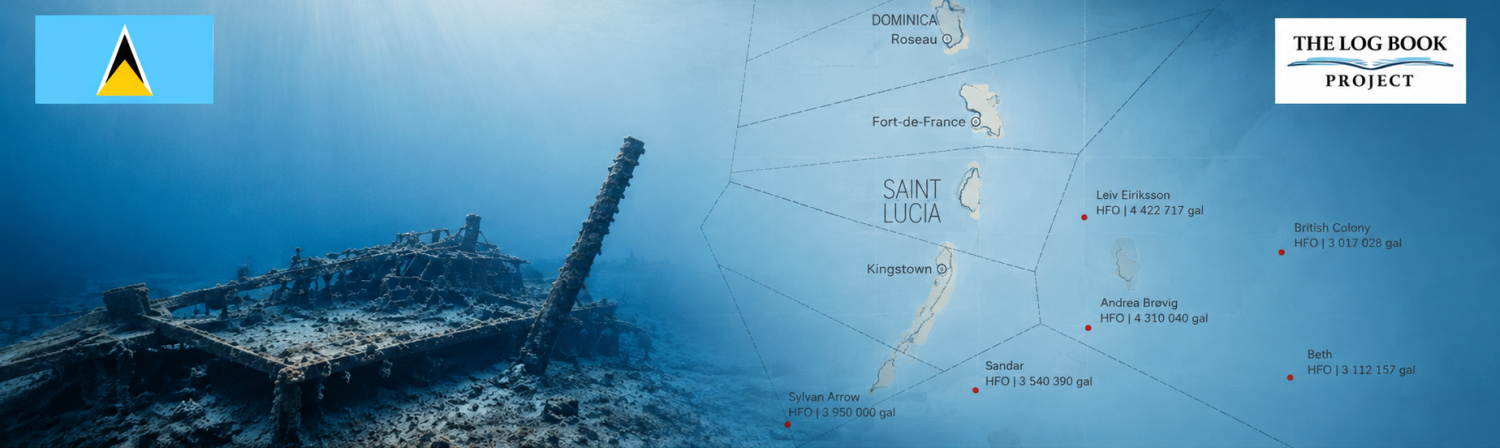
An independent research initiative within The Logbook Project, examining World War II shipwrecks in the Caribbean and their enduring historical and potential environmental legacy.
The Logbook Project (TLBP) provides the framework for a focused programme of historical research into World War II ship losses in the Caribbean.
The work centres on identifying, mapping, and documenting wartime wrecks, and on compiling structured historical datasets for individual vessels. These datasets bring together information on loss circumstances, cargo, and historical context in a form that allows informed assessment of potential long-term environmental relevance.
While grounded in historical research and remembrance, this work is intentionally applied. By assembling and presenting information that has not previously been brought together for this region, the project aims to support further research and responsible evaluation by others.
How We Approach the Work
The Logbook Project is guided by a research-led, evidence-driven approach. Archival material, contemporary records, and historical sources are evaluated critically, with explicit care taken to distinguish between verified information, reasoned interpretation, and uncertainty.
Archival research methodology
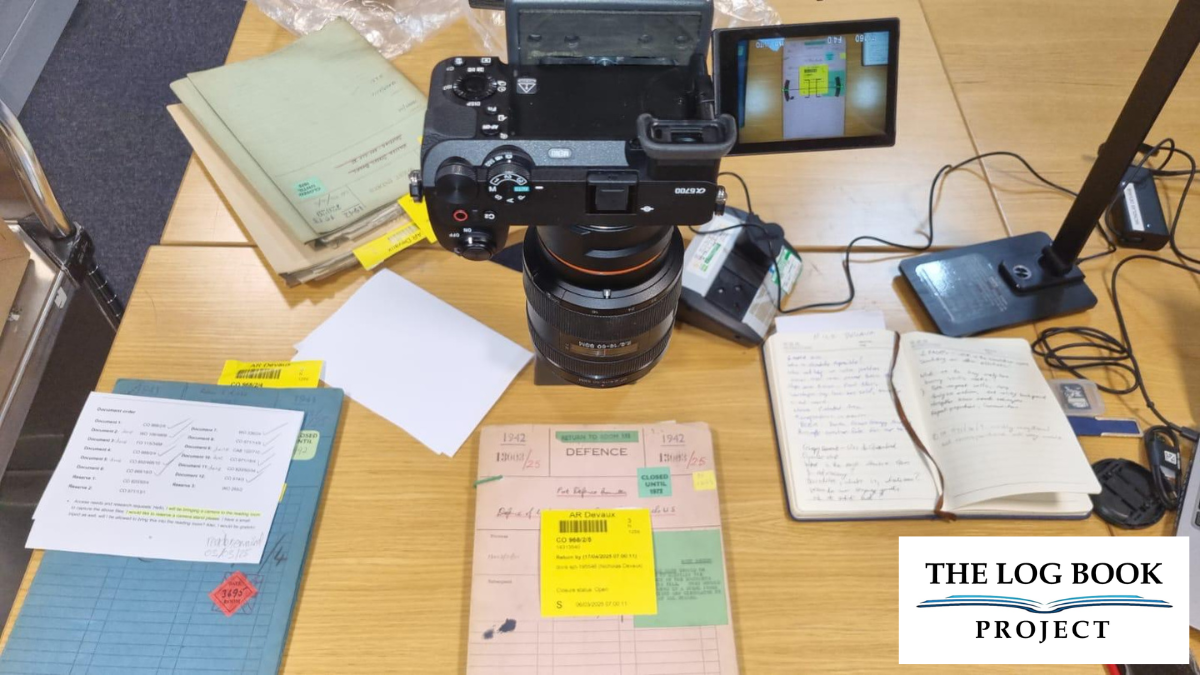
Our research draws on a range of primary and secondary sources, including original wartime documents accessed in archives, digitised records, and specialist material obtained from trusted repositories. All sources are reviewed, recorded, and cross-referenced to support transparent and verifiable analysis.
Spatial and contextual analysis are used to support historical understanding and structured documentation, rather than to sensationalize locations or events. Mapping serves as a means of organizing and interpreting historical data, not as an end in itself.
Across all work, emphasis is placed on clarity, transparency, and the responsible presentation of information, ensuring that research outputs can be understood and assessed within their proper historical context.
Focus and Purpose
Work undertaken within The Logbook Project focuses on documenting and understanding World War II ship losses in the Caribbean, with particular attention to vessels whose cargo and circumstances of loss give them potential long-term environmental relevance.
The aim is to identify, map, and compile historical records for individual wrecks in a structured way that allows their significance to be assessed beyond the moment of sinking. By bringing together information on vessel type, cargo, and loss context, the project helps establish which wrecks may be considered Potentially Polluting Wrecks and why.
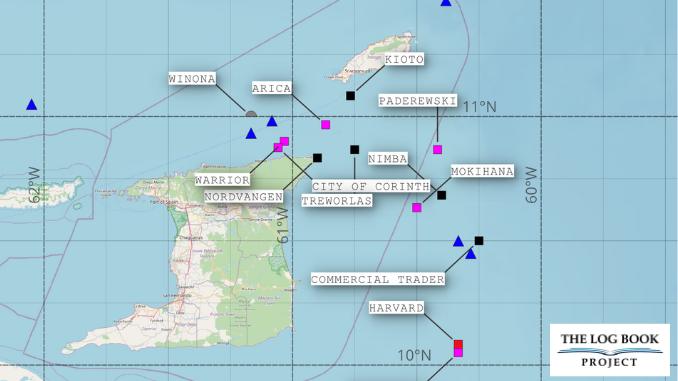
Map – record – compile.
This focus reflects a broader purpose: to support informed research, historical understanding, and responsible discussion by making dispersed and often incomplete wartime information accessible in a coherent and transparent form.
Structure of the Project
This site presents the work of The Logbook Project through a small number of complementary sections, each serving a distinct purpose.
The Project Outline provides an overview of how the research is structured, including definitions, boundaries, and the way information is organised.
Our Path to PPWs explains how specific lines of research emerged within the project, offering insight into the thinking and experience that led to a focus on Potentially Polluting Wrecks.
Project-specific pages present individual studies in greater detail, allowing readers to explore particular vessels, incidents, or datasets as the work develops.
Together, these sections are intended to guide readers from context, to understanding, to detailed research, depending on the level of information they wish to explore.